Lewis SelbyCo-Founder, Maxme
6 min read
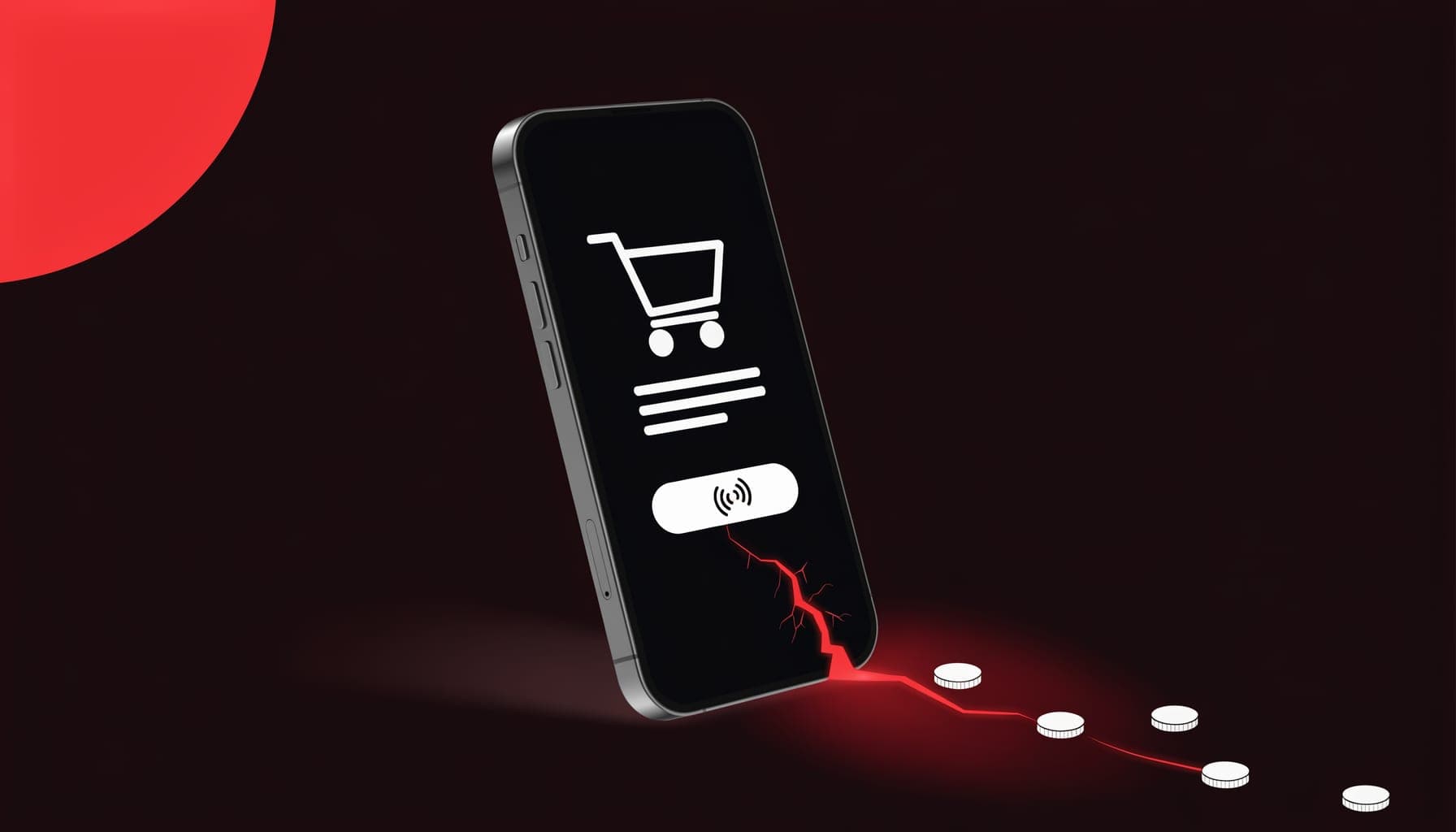
African shoppers abandon working checkouts for three fixable reasons: the payment method they actually use, Mobile Money, is buried or missing; a misconfigured gateway like Paystack silently fails for a subset of payment types; and broken pixel data hides the drop-off so you cannot see it. Fix the last mile before you spend another cedi on ads.
The revenue leak hiding inside a checkout that looks fine
The most expensive problem in African e-commerce is the one your dashboard tells you does not exist. Traffic is arriving. Product pages are being viewed. Add-to-cart is firing. And then, quietly, the orders do not come. Every surface metric looks normal, so the instinct is to spend more on ads or rewrite the creative.
Almost always, the real problem is downstream of the ad and downstream of the product page. It lives in the last mile, the handful of seconds between a shopper deciding to buy and the payment actually clearing. That stretch is where African stores lose money they never see leave, because the tools that would show them the loss are usually broken at the same time.
Why does Mobile Money order matter more than you think?
In Ghana, Mobile Money (MoMo) is not an alternative payment method. For a large share of shoppers it is the payment method, the default way they move money every day. When a checkout lists cards first and buries MoMo below the fold, or omits it entirely, you are asking your most ready-to-buy customers to stop and hunt for the way they normally pay.
That friction lands at the worst possible moment, the exact instant of purchase intent, when any hesitation converts a buyer back into a browser. In one diagnostic on a Ghana-based fashion store, MoMo simply was not appearing first in the payment options. Repositioning it as the default option removed a blocker that no amount of ad spend could have overcome.
The silent gateway failure that shows you nothing
Payment gateways like Paystack are reliable, but a single configuration error can cause checkout to fail for a subset of payment methods while working perfectly for the rest. The customer hitting the broken path sees an error and leaves. You see nothing, because a failed checkout does not generate a successful order to investigate.
This is the cruelty of last-mile bugs: they are invisible from the top of the funnel. The only way to catch them is to test the store the way a customer uses it, end to end, on the payment methods your customers actually reach for.
- Run an end-to-end order simulation on every payment method, not just cards.
- Test on mobile, where the majority of African e-commerce traffic converts.
- Confirm the confirmation: an order that does not reach your dashboard did not happen, no matter what the ad platform says.
Your pixel is lying to you (and your ads are learning from it)
When a Meta Pixel fires incorrectly, it does not just misreport numbers. It corrupts the purchase events your ad account learns from, so the algorithm optimises toward the wrong people. You end up paying to reach lookalikes of buyers who never actually bought.
Fixing this is the foundation of everything Maxme does. We rebuild tracking from the server up with first-party Meta Conversions API (CAPI), reconcile every event against real orders in your store dashboard, and deduplicate the signal so nothing double-counts. The result is one number you can trust, and an ad account that finally optimises toward real buyers.
WhatsApp orders are real orders. Are you counting them?
A meaningful share of African online sales do not close on a checkout page at all. They close in a conversation, on WhatsApp or in DMs, where a shopper asks a question and a person answers. If those orders never make it back into your tracking, your data understates real demand and your ad account never learns which campaigns actually drive revenue.
Capturing WhatsApp and Mobile Money orders inside your source of truth is what turns a partial, misleading picture into the full one. It is also what lets you buy media against real order profit instead of the fraction of sales a browser pixel happened to see.
Fix the last mile before you scale spend
The stores that win in African e-commerce are rarely the ones with the biggest budgets. They are the ones whose funnel does not leak, whose preferred payment method is one tap away, whose gateway works on every path, and whose tracking tells the truth. Once that foundation is solid, media spend compounds instead of papering over a hole.
When we launched a Ghana-based eye care e-commerce brand on a clean, trustworthy funnel, the store converted at 18.56% on optical products with 299% year-over-year revenue growth. That is what buying against real order truth looks like once the last mile is fixed. It is also why every Maxme engagement starts with a free audit, not a campaign.