Lewis SelbyCo-Founder, Maxme
11 min read
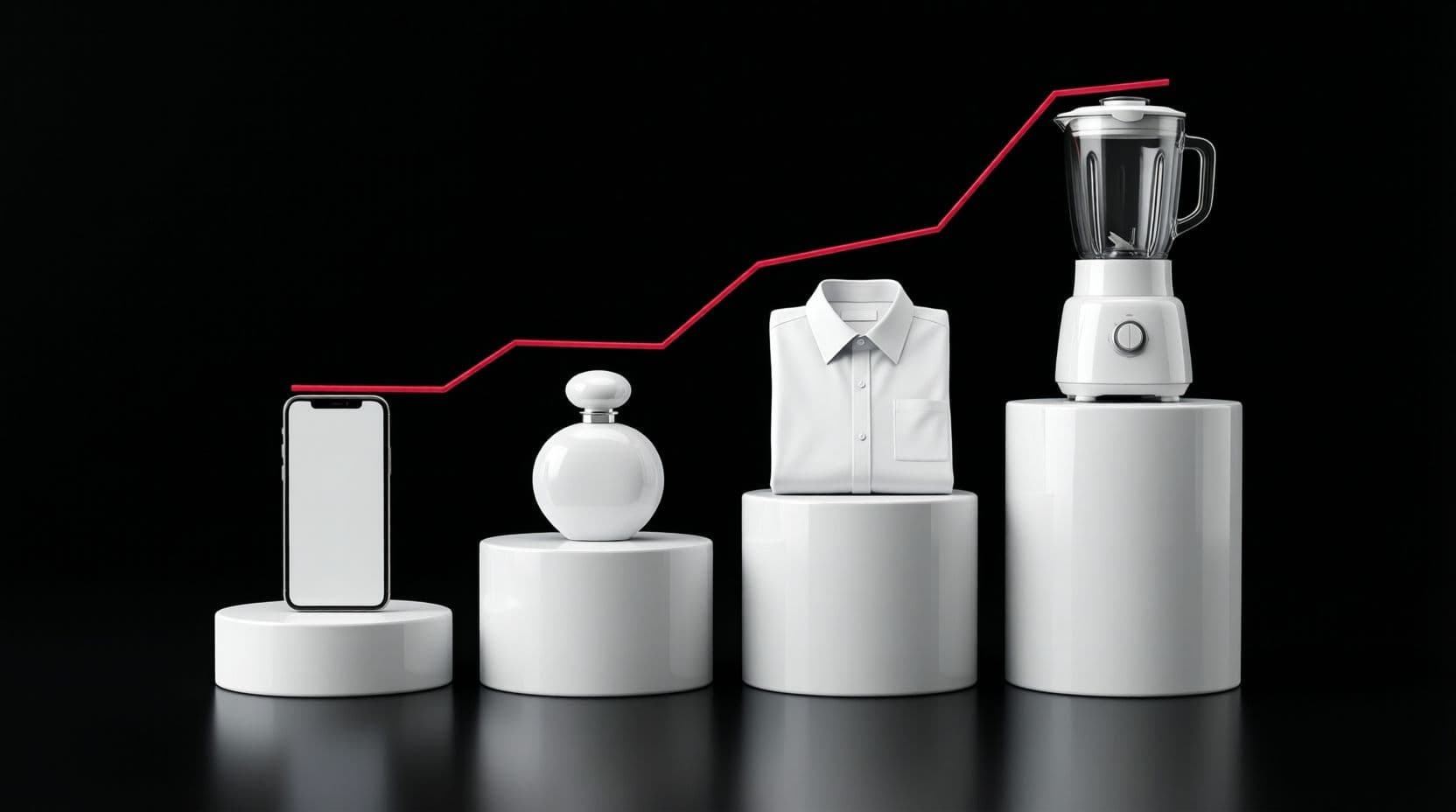
Phones and accessories, beauty and personal care, fashion, and home and kitchen goods, especially small appliances, sell fastest online in Ghana, based on Jumia's filings and Ghana site, Google Trends and payment data. Backup power such as power banks is rising quickly, while groceries are a small slice of Jumia's sales. Test demand with a small click-to-WhatsApp ad before you buy stock.
What sells very fast in Ghana?
Four categories carry most online sales in Ghana right now: phones and accessories, beauty and personal care, fashion, and home and kitchen goods, especially small appliances. That is our reading of public evidence, not a sales ranking, because nobody publishes Ghana-wide online sales by category. Jumia comes closest: its five priority categories, phones, electronics, home and living, fashion and beauty, made up 95% of its physical-goods sales value across its markets in 2025.
The table pairs each category with the evidence behind it and the catch a small seller should plan for. The evidence comes from Jumia's annual report and results, Jumia Ghana's own site and seller hub, Google Trends searches in Ghana, and Bank of Ghana, World Bank and Ghana Statistical Service data. The last column is our synthesis, and it is labelled as such so you can weigh it separately.
| Category | Public evidence | Watch out for (our synthesis) |
|---|---|---|
| Phones and accessories | A Jumia priority category; Jumia's Ghana seller hub calls phones and electronics accessories its highest-demand category; phone models fill the top Google searches for "price in ghana" over the past 12 months. | Thin margins and supply shocks: Jumia reported phone shortages from memory chip and CPU price rises in 2026. Accessories are an easier start. |
| Beauty and personal care | Strong in Jumia's second-quarter 2026 results and its 2025 Black Friday; the seller hub cites high reorder rates; Google searches for "perfume" in Ghana nearly doubled between 2022 and 2026. | Fakes and expired stock destroy trust. Buy from traceable suppliers and show seals and expiry dates. |
| Fashion and footwear | Strong in Jumia's second-quarter 2026 results; Jumia's international sellers grew with affordable fashion from Turkey; wig and sneaker searches in Ghana peak in December. | Size questions and returns. Post size charts and photos on real bodies. |
| Home, kitchen and small appliances | Home and living was the largest share of items Jumia sold across its markets in 2025; blenders, air fryers, table-top fridges and fans filled Jumia Ghana's top-selling row on 24 September 2026. | Bulky or fragile items cost more to deliver and return. Price delivery by zone before you advertise. |
| Backup power | Google searches for "power bank" in Ghana more than tripled between 2022 and 2026 and "inverter" doubled; Jumia's seller hub lists solar and power products as a high-demand niche. | Demand jumps when the lights go off, then cools. Test battery claims before you sell. |
| Groceries and packaged food | "Other", which includes fast-moving consumer goods, was about 5% of Jumia's physical-goods sales value in 2025; Melcom offers same-day supermarket delivery on cash-on-delivery orders in Greater Accra. | Low order values make delivery expensive per order. Works best with repeat buyers in a tight local zone. |
| Baby products | A top-level category on Jumia Ghana's menu; Ghana's total fertility rate was 3.1 in the 2021 census; searches for "diapers" stay steady through the year. | Thin public sales data. Test small and favour repeat items such as diapers and wipes. |
What does Jumia's data say about Ghana?
Jumia is listed in New York, so it reports its numbers publicly, which makes it the best public window on what Ghanaians buy online. Ghana stands out in those reports. For the two months to 30 November 2025, which covered Black Friday, Jumia reported Ghana orders up 81% and sales value up 132% on the year before, with electronics, beauty, and home and living strong across its markets.
In the second quarter of 2026, Jumia said fashion, beauty, and home and living performed strongly, while phones and electronics were hurt by supply disruptions from memory chip and CPU price rises. It named Ghana, with Nigeria, as delivering another strong quarter. Across its markets, 61% of orders came from outside capital cities and main urban centres, and 44% of new customers from early 2026 bought again within 90 days.
Jumia's shelf tells a similar story. On 24 September 2026, the Top selling items row on jumia.com.gh was mostly blenders, air fryers, table-top fridges, smart TVs and standing fans, plus a MiFi router, a basic Nokia phone and a school backpack. That row is a snapshot chosen by Jumia, not a ranked list, but many of those products carry thousands of customer ratings.
What do Google searches in Ghana show?
Google Trends shows how search interest changes over time, on a 0 to 100 scale within each comparison. It measures curiosity, not sales, and scores from different comparisons cannot be compared with each other. Still, it is free, it is specific to Ghana, and anyone can repeat our checks using the links in the sources. We compared the 2022 average with the 2026 average so far.
Our reading of the results below: backup power and small kitchen appliances are growing from a low base, which often means fewer established sellers online, and demand in Ghana is seasonal. Stock for Christmas in early November, and for the hot months from March, when fan and power searches rise. This is what Google Trends showed on 24 September 2026:
- Phones lead price searches: over the past 12 months, the top searches linked to "price in ghana" were mostly phone models, from the iPhone 11 to the iPhone 17 and Samsung's A16 and A17, alongside fridges, gold and cocoa.
- Perfume searches nearly doubled, from an average of 47 in 2022 to 87 in 2026, and reached their five-year peak in August 2026.
- Power bank searches more than tripled, from 13 to 43, and inverter searches doubled, from 18 to 37. Both peaked in late April 2026.
- Air fryer searches rose from 7 to 12 in a comparison where fridges stay far ahead and peak around Christmas. Standing fans peak from March to May.
- Wig and sneaker searches peak in December, and searches for "buy online" are highest in November and December, when Black Friday and Christmas shopping land.
How ready are Ghanaians to pay and shop online?
The payment side is ready. The Bank of Ghana counted 80.5 million registered mobile money accounts in 2025, 26.6 million of them used in the previous 90 days, and 9.70 billion MoMo transactions worth GHS 4.54 trillion. The World Bank's Global Findex puts mobile money account ownership at 78.3% of Ghanaian adults in 2024. The 1% E-Levy on electronic transfers was also scrapped in April 2025.
The shopping habit is younger. In the same Findex survey, 14.8% of Ghanaian adults said they had used a phone or the internet to buy something online, up from 8.6% in 2021. So most of your potential buyers are not yet regular online shoppers. In our experience they know MoMo well, but still want to ask a person, see the real item and trust the seller before they pay.
And they shop on phones. Ghana's 2021 census found that 73.1% of people aged 12 and older owned a smartphone, about ten times the share who owned a laptop, and that 68.2% of people aged 6 and older went online with a smartphone, against 6.5% on a laptop or desktop. Product photos, videos, prices and checkout must all work on a small screen first.
What makes a product sell well online in Ghana?
This section is our synthesis from the evidence above and from auditing Ghanaian online shops, not a published study. The products that move fastest online here usually tick most of the five boxes listed below. The more boxes a product ticks, the less you pay in ads, delivery and customer service for each order, and the faster your money comes back to restock.
Checkout is part of the product. A fashion brand can stock the right dresses and still lose buyers at payment. In one Ghanaian fashion store we worked on, fixing a Paystack configuration error, putting MoMo first and repairing the Meta Pixel took checkout conversion from 5.88% to 20.35%, and completed checkouts from 4 to 23, across two 30-day windows. That is why the last box matters as much as the product.
- Repeat purchase: beauty, personal care, baby consumables and phone accessories run out or wear out, so one buyer orders again. At Jumia, 44% of new customers from early 2026 came back within 90 days.
- Easy delivery: small, light, hard-to-break items travel cheaply by rider or courier. Jumia said fuel prices pushed up its delivery costs in 2026, and it now sends 75% of its packages to pickup stations.
- Shows well on a phone: the value is clear in a short video, such as a blender crushing ice or a perfume's bottle and box, without needing a manual.
- Price point: impulse buys sit where a customer will pay by MoMo without a long debate. High-ticket items such as fridges sell too, but need more proof and trust.
- MoMo friendly: the buyer can pay the full amount from a wallet in one step, by payment link or merchant number, before or at delivery.
How do you test demand cheaply before you stock up?
Before you buy a carton, sell the idea. Pick two or three products, get one real sample of each, and shoot a short video and three photos in daylight. Post them on WhatsApp Status and Instagram with the price, and count the questions. Then search each product name with "price in ghana" on Google Trends to see whether interest is rising, flat or seasonal.
Next, run a small click-to-WhatsApp ad for each product: a Facebook or Instagram ad whose button opens a WhatsApp chat with you. Give each product its own ad and greeting, and a budget you can afford to lose for 5 to 7 days, for example US$5 a day per product, since Meta does not bill ad accounts in cedis. Our guide "Click-to-WhatsApp ads in Ghana" covers the setup.
Judge the test on money, not chats. Take pre-orders with a deposit or full payment by MoMo or a payment link, and divide each ad's spend by the paid orders it produced. A product that brings cheap chats but no payments has failed the test. A product that brings paid orders at an ad cost below your profit per order has earned a first stock order.
What are some popular e-commerce websites in Ghana?
On Google Trends, the most searched shopping sites in Ghana over the past five years are Jiji, a classifieds site for new and used goods that bought its main rival Tonaton in February 2022, and Jumia, a marketplace whose searches peak in November, around Black Friday. Tonaton's own search interest has fallen every year since the merger, from 42 in 2022 to 14 in 2026 in the same comparison.
Newer and specialist names matter too. Temu runs a Ghana site, and its search interest in Ghana climbed from almost nothing until 2024 to an average of 28 in 2026 in that comparison. Jumia's own annual report names Temu and Good Pappa as its main online competitors in Ghana. Melcom sells online with cash on delivery, MoMo and cards, and Franko Trading sells phones, laptops and appliances online.
For a small business, these sites are both channels and competition. You can list on Jumia or Jiji to borrow their traffic, while selling through Instagram, TikTok and WhatsApp, then add your own store once repeat orders make it worthwhile. Maxme's Store Launch builds that store from GHS 5,000 on WooCommerce or GHS 6,000 on Shopify (about US$430 and US$517), excluding VAT; see our pricing page.
If you already have a product that sells in chats and want to know what is holding it back online, our free Ads & Store Audit sends you a short video review on WhatsApp within 2 working days, with the three fixes that matter most.